Watched Every Second: How Employer Surveillance Technology Is Stripping Workers of Their Dignity and Their Rights
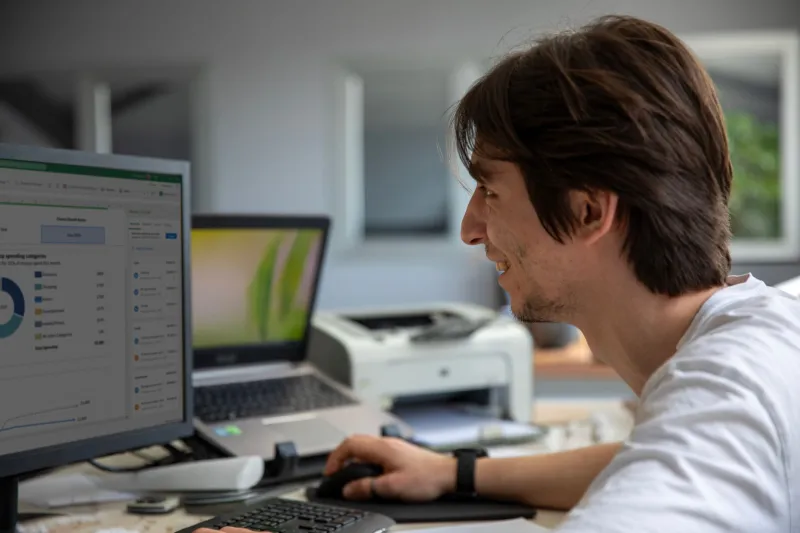
For millions of American workers, the workday no longer begins when they clock in and ends when they clock out. It begins the moment their employer's software activates — logging every keystroke, capturing periodic screenshots, triangulating their GPS position, and feeding their behavior into an algorithm that assigns them a productivity score before they've had their first cup of coffee.
This is not a hypothetical future. It is the present reality for warehouse associates, delivery drivers, call center employees, remote office workers, and an expanding range of professionals whose labor is now mediated by surveillance tools their employers rarely disclose in full and that federal law does almost nothing to regulate.
The explosion of workplace monitoring technology over the past decade — accelerated dramatically by the shift to remote work during the COVID-19 pandemic — has created a profound and growing imbalance of power between employers and the people who work for them. Understanding that imbalance, and legislating a remedy, is not merely a matter of worker comfort. It is a matter of basic civil rights in the modern economy.
The Scale of What Is Happening
Industry surveys suggest that a substantial majority of large American employers now use some form of employee monitoring software. The tools vary widely in their intrusiveness. At the less invasive end, employers track login times and measure output against targets. At the far end, some platforms capture screenshots every few minutes, activate webcams to verify that workers are at their desks, analyze facial expressions for signs of distraction, and flag bathroom breaks that exceed what an algorithm deems acceptable.
Amazon's warehouse surveillance infrastructure has received particular scrutiny. Workers there contend with productivity quotas enforced in real time by software that tracks their every movement and can trigger disciplinary action — or termination — without meaningful human review. Delivery drivers for multiple companies report GPS monitoring so granular that their employers are notified if they stop their vehicle for longer than a prescribed interval.
Remote workers in white-collar industries have not been spared. A growing market of so-called "bossware" products — with names that market themselves as productivity solutions — gives managers the ability to view an employee's screen at any moment, log the websites they visit, record their communications, and generate reports on how many minutes per hour they spend actively typing versus sitting idle.
The technology is advancing faster than any conversation about its appropriate limits.
Who Bears the Heaviest Burden
Workplace surveillance does not fall evenly across the labor force. Research consistently demonstrates that lower-wage workers — disproportionately workers of color, women, and immigrants — face the most aggressive and invasive monitoring regimes. A warehouse picker tracked by algorithm and a senior software engineer working from home may both be monitored, but the consequences of that monitoring are not equivalent.
For the warehouse worker, a momentary deviation from a productivity algorithm's expectations can trigger an automated warning, a formal write-up, or dismissal. For higher-earning professionals, monitoring tends to be less granular, more easily contested, and less likely to result in immediate disciplinary action. The same technology, applied differently across the class structure of a workplace, compounds existing inequalities rather than neutralizing them.
There is also a documented psychological toll. Studies examining heavily monitored work environments consistently find elevated levels of anxiety, reduced job satisfaction, and diminished trust between workers and management. Counterintuitively, some research suggests that intensive surveillance can actually suppress productivity by creating a climate of fear that discourages the kind of autonomous problem-solving that makes workers genuinely effective. The employer who believes they are optimizing output may be engineering its decline.
A Legal Framework Built for Another Era
Federal law governing workplace privacy is, to put it plainly, inadequate. The Electronic Communications Privacy Act of 1986 — the primary federal statute governing electronic surveillance — was written before smartphones existed, let alone AI-powered productivity monitoring software. Courts have generally interpreted its provisions to give employers broad latitude to monitor communications and activity on employer-owned devices and networks.
Beyond that statute, workers have limited recourse. A small number of states — Connecticut, Delaware, and New York among them — require employers to notify workers when monitoring is in place. But notification is not consent, and disclosure requirements without substantive limits on what employers may do with surveillance data offer workers little real protection.
No federal law currently requires employers to disclose what data they collect, how long they retain it, who has access to it, or how it is used in employment decisions. No federal law prohibits the use of algorithmically generated productivity scores as the basis for termination without human review. No federal law gives workers the right to access or correct the data their employers have compiled about them.
This is not an oversight. It is a gap that has allowed an industry to grow unchecked, and it demands a legislative response.
What Meaningful Reform Looks Like
Protecting workers from invasive surveillance does not require prohibiting all monitoring. There are legitimate business interests in ensuring that employees are performing their duties, that company data is secure, and that workplace misconduct is detectable. The goal of federal legislation should be to draw clear lines between reasonable oversight and dignity-stripping surveillance — lines that currently do not exist.
A serious federal worker privacy framework would begin with mandatory, plain-language disclosure. Workers should know exactly what is being monitored, on what devices, during what hours, and for what purposes — before they accept a position, not buried in an onboarding document they are pressured to sign in minutes.
Beyond disclosure, federal law should establish substantive limits. Biometric surveillance — facial recognition, eye-tracking, and similar technologies — should require explicit informed consent. Automated disciplinary systems that can trigger adverse employment actions without human review should be prohibited. Workers should have a legal right to access the data their employers hold about them and to challenge its accuracy.
For lower-wage workers in sectors with documented histories of surveillance abuse, additional protections are warranted. Productivity quotas enforced by algorithm, with no mechanism for workers to contest their accuracy or appeal adverse outcomes, should face particular scrutiny.
Finally, any federal framework must include meaningful enforcement. Statutory rights without enforcement mechanisms are promises, not protections. Workers who experience violations should have access to legal remedies, and agencies charged with enforcement should be adequately resourced to investigate complaints.
The Principle at Stake
At its core, this is a question about what kind of relationship we believe should exist between employers and the people who do the work that makes their businesses run. A worker who is tracked, scored, and disciplined by an algorithm — with no transparency, no recourse, and no legal protection — is not a partner in an enterprise. They are a monitored input in a production system.
That model of work is not inevitable. It is the product of policy choices, and policy choices can be changed.
Congress has an obligation to update federal law to reflect the realities of the modern workplace. Workers in every sector, in every state, deserve to know what their employers know about them — and to have meaningful legal protection against surveillance that crosses the line from oversight into control.
Every American who goes to work deserves to do so with their dignity intact. That is not too much to ask. It is the baseline from which every other labor protection should follow.