Justice by Net Worth: The Legal Representation Gap That Is Condemning Americans Before They Ever Reach a Verdict
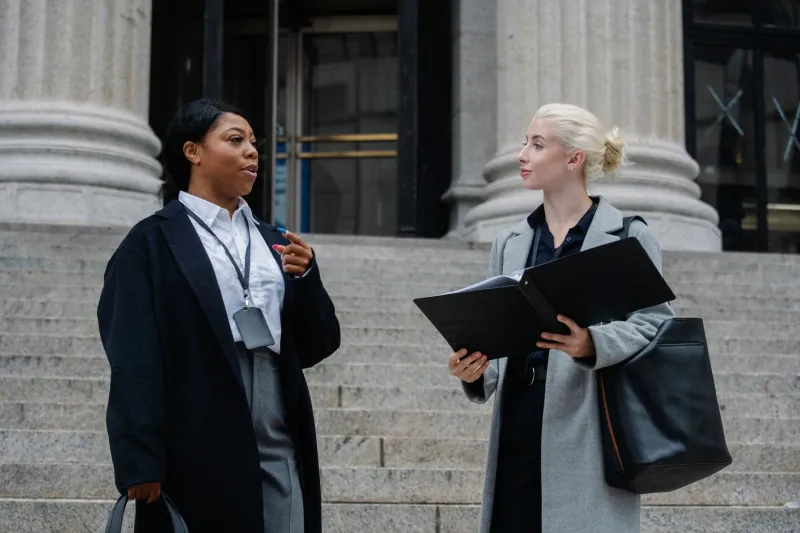
Carved into the facade of the United States Supreme Court building are four words that have defined the aspirational promise of American democracy: Equal Justice Under Law. They are among the most recognized words in the country. They are also, for tens of millions of Americans, among the least realized.
The uncomfortable truth is that the American legal system operates on a two-tiered basis. On one tier sit those with the financial resources to retain experienced private attorneys — professionals who have the time, staff, and tools to mount a thorough defense or pursue a meritorious civil claim. On the other tier sit everyone else: the working poor, the middle class stretched thin by circumstance, and the vulnerable communities who cannot afford to buy their way to competent representation. For the people on that second tier, the outcome of a legal proceeding is frequently decided long before any evidence is weighed or any argument is heard.
This is not a theoretical problem. It is a daily, structural catastrophe playing out in every county courthouse in the United States.
The Public Defender Crisis No One in Washington Wants to Name
The Sixth Amendment guarantees every person accused of a crime the right to legal counsel. In 1963, the Supreme Court's landmark ruling in Gideon v. Wainwright extended that right to defendants who cannot afford an attorney, requiring the government to provide one. It was a transformative decision — and one that has been chronically, systematically underfunded ever since.
Public defender offices across the country are operating in a state of managed collapse. The American Bar Association has long recommended that public defenders carry no more than 150 felony cases per year to provide constitutionally adequate representation. The reality in many jurisdictions is staggeringly different. Public defenders in Miami-Dade County have carried caseloads exceeding 500 felony cases annually. In Louisiana, some public defenders have represented more than 400 clients simultaneously. In rural counties from Appalachia to the Mississippi Delta, a single overworked attorney may serve an entire region with virtually no investigative resources, no expert witnesses, and no time.
The consequences are not abstract. When a public defender has only eleven minutes — an average documented in some studies — to spend on each client before a hearing, people plead guilty to crimes they did not commit simply because no one had time to investigate their case. They accept plea deals that carry devastating long-term consequences — lost employment, lost housing, lost voting rights — because the alternative is an even longer wait in pretrial detention they cannot afford to survive financially.
Consider the documented pattern in jurisdictions where cash bail intersects with overwhelmed public defense: a person arrested on a low-level charge, unable to post bail, loses their job within days. Their apartment follows. By the time an overloaded public defender gets around to reviewing the case, the defendant's life has already been upended — and pleading guilty, even to something they did not do, starts to look like the fastest path back to some semblance of stability. This is not justice. It is coercion dressed in legal procedure.
The Civil Justice Desert
The criminal system, as broken as it is, at least carries the constitutional guarantee of appointed counsel. The civil justice system offers no such protection — and the consequences are equally severe.
Every year, millions of Americans face civil legal proceedings that will determine where they live, whether they keep their children, how much debt they carry, and whether they can remain in the country. Eviction hearings. Child custody disputes. Debt collection suits. Immigration cases. Wage theft claims. Benefit denials from Social Security, disability programs, and veterans' services. In the vast majority of these proceedings, low-income Americans walk into court alone, facing opposing parties who almost always have legal representation.
The disparity is not subtle. Studies consistently show that represented tenants facing eviction are dramatically more likely to remain housed than unrepresented ones — not necessarily because their cases are stronger, but because they have someone who knows the procedural rules, can identify improper documentation, and understands how to negotiate. The same pattern holds in debt collection courts, where creditors are represented in the overwhelming majority of cases while debtors appear pro se. In immigration proceedings, where the stakes include deportation and family separation, individuals without attorneys are removed at rates that dwarf those with legal counsel.
Legal aid organizations, which exist to serve this gap, are themselves perpetually underfunded. The Legal Services Corporation — the primary federal funder of civil legal aid for low-income Americans — has seen its budget flatline or shrink in real terms for decades, even as the population it serves has grown. It is estimated that for every client legal aid organizations are able to serve, at least one eligible person is turned away for lack of resources.
What Adequate Federal Investment Would Look Like
This is not a problem without solutions. It is a problem without sufficient political will — and that is precisely the kind of problem that demands legislative leadership.
Shireen's platform includes a commitment to federal legislation that treats access to legal representation as a public good, not a private luxury. Concretely, that means the following:
Robust funding for public defender infrastructure. Federal grants to state and local public defender offices, tied to caseload standards and staffing requirements, would begin to close the resource gap that has made the Sixth Amendment's promise largely theoretical for the poor. This includes funding for investigators, social workers, and expert witnesses — the support infrastructure that private defense attorneys take for granted.
Expansion of the Legal Services Corporation. Tripling the LSC's annual appropriation, as multiple advocacy organizations have proposed, would allow civil legal aid providers to serve the millions of Americans currently turned away each year. Targeted funding streams for housing, family law, immigration, and benefits cases would ensure resources reach the areas of greatest need.
Right-to-counsel expansions in civil proceedings. Several cities and states have pioneered right-to-counsel programs in eviction proceedings, with measurable results. Federal incentive funding could accelerate adoption of these models nationally, beginning with the categories of civil cases — eviction, child welfare, and immigration — where the consequences of unrepresented proceedings are most severe.
Investment in law school loan forgiveness for public interest attorneys. One reason public defender and legal aid offices struggle to retain talent is that law school debt makes public service financially untenable for many graduates. Expanding and strengthening existing loan forgiveness programs for attorneys who commit to public interest work would build the pipeline of skilled professionals these offices desperately need.
The Deeper Democratic Argument
Access to legal representation is not merely a matter of fairness in individual cases, though it is certainly that. It is a foundational question about whether democratic equality means anything in practice. A society that guarantees rights on paper while systematically denying the means to exercise those rights has not achieved justice — it has achieved the performance of justice, which is something very different.
The communities most harmed by the legal representation gap are the same communities that have historically been excluded from full participation in American civic life: low-income families, communities of color, rural populations, immigrants, and working people who cannot afford to take days off work to navigate a system not designed with them in mind. When the legal system fails these communities, it does not fail in isolation. It compounds every other inequality they face.
Every American deserves more than a lottery ticket when they walk into a courtroom. They deserve a genuine, well-resourced advocate standing beside them — regardless of their zip code, their income, or the circumstances that brought them there. That is not a radical proposition. It is the basic premise of a society that takes its own founding ideals seriously.
Shireen is committed to fighting for that premise in Congress, because a voice for every American means nothing if that voice goes unheard in the very institutions designed to protect it.