From Forgotten Fields to the Floor of Congress: How Rural Communities Are Demanding a Seat at the Table
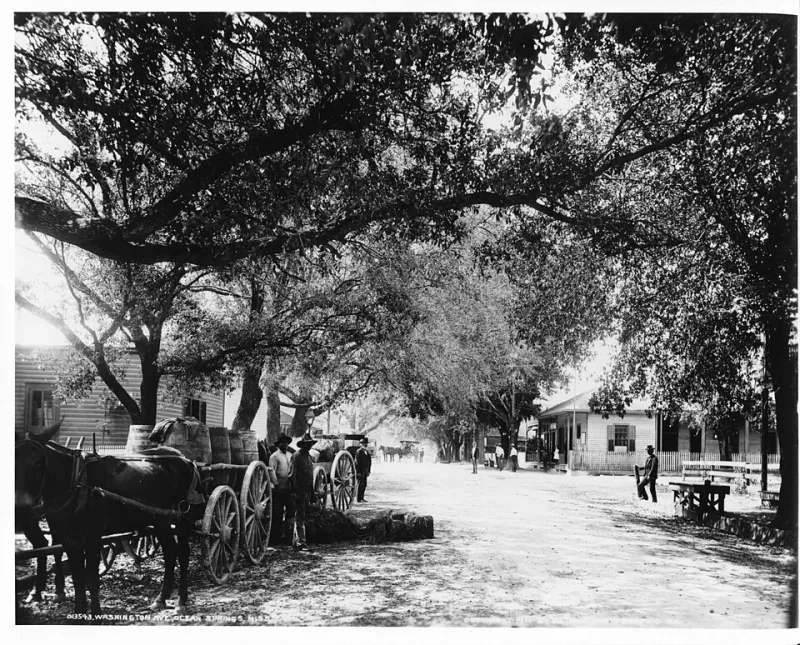
Photo: Department of Agriculture. 1862, Public domain, via Wikimedia Commons
Drive two hours outside any major American city and the landscape changes dramatically — not just the scenery, but the conversation. In diners, grain elevators, and town hall meetings from the Mississippi Delta to the high plains of Montana, a consistent and urgent message is emerging: rural America feels left behind, and it is done waiting politely for Washington to notice.
For decades, federal policymakers have concentrated resources, attention, and legislative energy on urban centers and suburban corridors. The consequences of that neglect are visible in shuttered main streets, crumbling farm roads, spotty cell service, and hospitals that have quietly closed their doors. But something is shifting. Rural communities are organizing, speaking louder, and — critically — finding candidates willing to genuinely engage with their concerns rather than simply appear at a county fair every four years.
Shireen's campaign has made rural engagement a cornerstone of its platform, conducting listening sessions in communities that rarely see a congressional candidate outside of election season. What her team has heard reflects both the depth of rural frustration and the remarkable resilience of the people who call these places home.
The Broadband Gap: A 21st-Century Civil Rights Issue
Ask nearly any rural resident what their single most pressing infrastructure need is, and the answer arrives with striking consistency: reliable, affordable high-speed internet. What urban dwellers take for granted — the ability to work remotely, access telehealth services, enroll in online courses, or simply run a modern small business — remains out of reach for millions of Americans living outside metropolitan areas.
According to the Federal Communications Commission, roughly 21 million Americans lack access to broadband at speeds sufficient for basic modern use, and independent researchers suggest the actual figure may be nearly double that, owing to the FCC's historically flawed mapping methodology. The burden falls disproportionately on rural households.
"I lost two employees last year because they couldn't reliably work from home when they needed to," said a small business owner in a rural county who attended one of Shireen's listening sessions. "My competitors in the city don't have that problem. It's not a technology issue — it's a fairness issue."
Shireen has called for robust federal investment in rural broadband infrastructure, including grants and low-interest loans for rural electric cooperatives and municipal providers who can deploy service without the profit-driven hesitation of major telecommunications corporations. The goal, as her campaign frames it, is not simply connectivity — it is economic equity.
Agricultural Policy: Beyond the Farm Bill Talking Points
Farmers across the country have grown weary of Washington's tendency to treat agricultural policy as a political bargaining chip rather than a foundational national priority. The Farm Bill, which governs everything from crop insurance to nutrition assistance, is reauthorized every five years — and almost every cycle involves a bruising legislative battle that leaves farmers uncertain about their futures well into planting season.
Small and mid-sized family farms have faced particular hardship. Consolidation in the agricultural sector has accelerated dramatically over the past two decades, with corporate agribusiness capturing an ever-larger share of federal subsidy dollars while independent farmers struggle to remain solvent. Meanwhile, climate volatility — more frequent droughts, unpredictable frost patterns, and severe flooding events — has made farming increasingly precarious even for those with deep roots in the land.
"We don't need Washington to tell us how to farm," explained one third-generation grain farmer during a campaign event in a rural county. "We need Washington to make sure the rules aren't rigged against us before we even put a seed in the ground."
Shireen's agricultural platform prioritizes redirecting subsidy structures to favor smaller operations, expanding conservation programs that reward sustainable land stewardship, and strengthening antitrust enforcement in meat processing and seed markets — areas where monopolistic consolidation has stripped farmers of bargaining power.
Healthcare Deserts: When the Nearest ER Is an Hour Away
Perhaps no issue captures the compounding disadvantages of rural life more starkly than healthcare access. Since 2010, more than 140 rural hospitals have closed permanently, with hundreds more operating under severe financial strain. The result is a growing geography of medical vulnerability — communities where a heart attack, a complicated pregnancy, or a serious accident can become a death sentence simply because of distance.
Mental health services are even more scarce. Rural communities, which have been disproportionately affected by the opioid crisis, often lack the treatment infrastructure necessary to address addiction and co-occurring mental health conditions. Telehealth has offered some relief, but its effectiveness is directly constrained by — once again — the broadband gap.
Shireen has advocated for expanding Medicaid in holdout states, increasing federal support for rural critical access hospitals, and incentivizing medical professionals to practice in underserved areas through student loan forgiveness and competitive compensation programs. "Healthcare is not a luxury," her campaign has stated plainly. "It is a right that should not be determined by your ZIP code."
What Genuine Engagement Looks Like
What distinguishes Shireen's approach to rural outreach from the performative version that many rural voters have grown to distrust is consistency and specificity. Rather than arriving with a pre-packaged message and a handshake, her team has conducted structured listening sessions designed to surface local priorities — and then incorporated those priorities into concrete policy commitments.
Community leaders in several rural counties have noted that this approach feels meaningfully different. "Most politicians show up, say they understand us, and then you never hear from them again," said a county commissioner who participated in one such session. "This campaign actually followed up. That matters."
Building a truly representative Congress requires more than symbolic gestures toward rural America. It demands a sustained commitment to understanding the structural inequities that have accumulated over generations and the political will to dismantle them. Shireen's campaign represents a vision of representation that refuses to treat any community — rural or urban, large or small — as expendable.
A Voice Worth Amplifying
Rural America is not monolithic. Its communities are diverse in their demographics, their economies, and their specific challenges. What they share is a justified sense that the federal government has too often made decisions about them without them.
That is beginning to change. As rural voices grow louder and rural voters become more strategically engaged, the calculus in Washington is shifting. Candidates who take the time to genuinely listen — and who demonstrate that listening through actionable, specific policy commitments — are earning something that cannot be manufactured: trust.
Shireen for Congress is committed to being that kind of representative. Not just for the communities that are easy to reach, but for every corner of this district — every farm, every small business, every family navigating a healthcare system that was not designed with them in mind.
Every voice deserves to be heard. Every community deserves a champion. That is not a campaign slogan — it is a governing philosophy.
Learn more about Shireen's rural policy commitments at shireenforcongress.com, and find out how you can get involved in bringing these conversations to your community.