When the Last Bank Leaves Town: The Quiet Erosion of Small-Town Financial Life
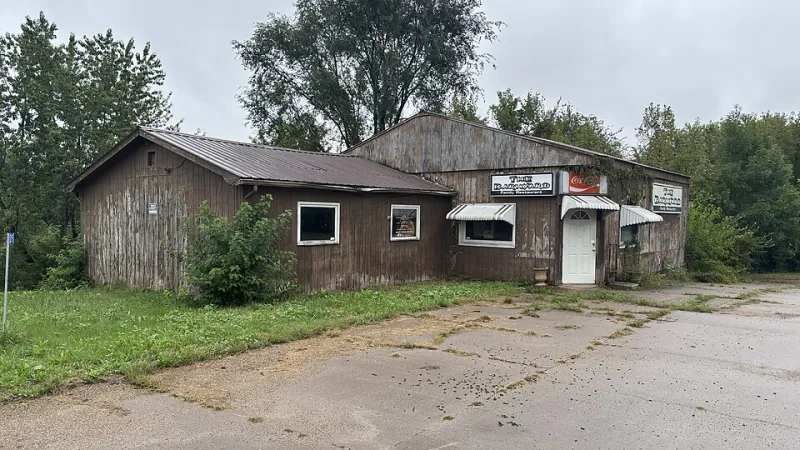
Photo: Toad40, CC BY-SA 4.0, via Wikimedia Commons
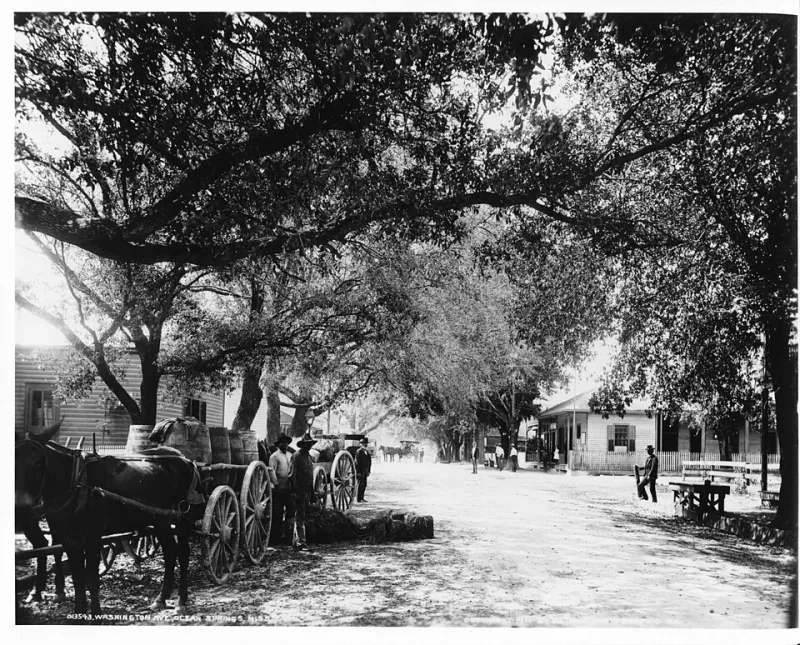
There is a particular kind of silence that settles over a small town's main street when the local bank closes. It is not dramatic. There is no announcement, no protest march, no moment of collective grief. The branch simply shutters — sometimes replaced by an ATM, more often by nothing at all — and another thread in the fabric of community economic life comes undone.
This is happening across America, and it has been happening for years. The question is whether Congress is paying attention.
A Disappearing Institution
In 1984, the United States had more than 14,000 commercial banks. By 2023, that number had fallen below 4,200. The decline is not evenly distributed. Megabanks — institutions with assets exceeding $100 billion — now control roughly 60 percent of all banking assets in the country. The institutions absorbing that share are not headquartered in Appalachian Ohio or the Mississippi Delta. They are headquartered in Charlotte, New York, and San Francisco.
Community banks — generally defined as institutions with less than $10 billion in assets — have borne the brunt of this consolidation. Between 2000 and 2020, more than 10,000 community bank charters disappeared through mergers, acquisitions, and outright failures. The Federal Deposit Insurance Corporation has documented that the most acute closures are concentrated in rural counties, where a single branch may serve an entire region.
When those branches close, the consequences extend far beyond inconvenience.
What Community Banks Actually Do
To understand what is lost when a community bank disappears, it helps to understand what these institutions actually provide — functions that national banks, for structural and incentive reasons, simply do not replicate.
Community banks make relationship-based lending decisions. A local loan officer knows that the farmer applying for an operating loan had a catastrophic crop year in 2019 but has successfully managed his land for three decades. A national bank's algorithm does not know that, and does not care. The result is that small businesses, agricultural operations, and first-time homeowners in rural areas find themselves locked out of credit markets when their community bank is absorbed by a distant institution whose underwriting criteria were designed for suburban borrowers with conventional financial profiles.
The Small Business Administration has documented this dynamic repeatedly: community banks, despite holding a minority of total banking assets, originate a disproportionate share of small business loans. When they disappear, small business formation in affected communities declines — and it does not recover quickly.
Entrepreneurs who might have opened a hardware store, a restaurant, or a small manufacturing operation instead find their loan applications rejected by institutions that have no framework for evaluating the particular risks and opportunities of their local economy. Dreams get deferred. Communities stagnate.
The Regulatory Burden That Crushes Small Lenders
It would be incomplete to discuss community bank closures without acknowledging the role that regulatory compliance costs have played in accelerating consolidation. The Dodd-Frank Act of 2010, passed in response to the catastrophic failures of the 2008 financial crisis, imposed compliance requirements that large banks absorbed relatively easily and that smaller institutions found genuinely burdensome.
This is not an argument against financial regulation — the 2008 crisis demonstrated with brutal clarity what happens when oversight fails. It is an argument for regulatory calibration: the recognition that a community bank with $200 million in assets serving a rural county poses categorically different systemic risks than a global financial institution with $2 trillion in assets and complex derivative exposure.
Some reforms have been made. The Economic Growth, Regulatory Relief, and Consumer Protection Act of 2018 provided modest relief to smaller institutions. But community bankers and their advocates argue that the structural compliance burden remains disproportionate, and that Congress has not done nearly enough to level the playing field between local lenders and their megabank competitors.
Communities That Fought Back — and What They Teach Us
The story is not entirely one of loss. Across the country, communities have found creative ways to preserve local financial infrastructure.
In parts of rural Vermont and the Pacific Northwest, credit unions have stepped in where banks have retreated, offering locally governed alternatives that prioritize member needs over shareholder returns. In several Midwestern states, municipal governments have explored public banking models — inspired in part by the century-old Bank of North Dakota — that keep capital circulating within the local economy rather than flowing outward to distant corporate headquarters.
These examples demonstrate that the disappearance of community banking is not inevitable. It is a policy outcome, and policy outcomes can be changed.
What Congress Must Do
Shireen believes that financial access is not a luxury — it is a precondition for economic participation. A family that cannot access a mortgage, a farmer who cannot secure an operating loan, and an entrepreneur who cannot get a line of credit are not failing individually. They are being failed systematically.
A serious congressional agenda on community banking would include several elements. First, targeted regulatory relief for small and mid-sized community lenders that does not compromise consumer protection or systemic stability — relief calibrated to actual risk, not blanket deregulation. Second, investment in the Community Development Financial Institution fund, which supports mission-driven lenders serving underserved markets, and which has been chronically underfunded relative to the scale of the need. Third, genuine exploration of public banking options at the federal and state levels, providing communities with alternatives when private market institutions have determined that serving them is insufficiently profitable.
Fourth, and perhaps most urgently, merger review standards that account for community impact. Current antitrust analysis of bank mergers focuses primarily on market concentration in terms of deposits. It does not adequately weigh the loss of relationship lending capacity, the reduction in small business credit access, or the long-term economic development consequences for affected communities. That framework needs to change.
The Deeper Question of Economic Power
Underlying the community bank crisis is a broader question about the concentration of economic power in American life — a question that connects to housing, healthcare, agriculture, and a dozen other domains where consolidation has left working Americans with fewer choices, less leverage, and diminishing stakes in their own communities.
When financial decisions affecting a rural county in Kentucky are made in a boardroom in Charlotte by executives who have never set foot in that county, something essential is lost. Not just economically, but democratically. Communities lose the capacity to shape their own economic futures.
Representation in Congress should mean representation of that loss — an insistence that the rules governing our financial system be written with Main Street in mind, not just Wall Street.
Shireen for Congress is committed to that insistence. Every American deserves a financial system that sees them — not as a market segment to be optimized, but as a neighbor whose success is worth investing in.