The Hidden Debt Crisis Draining America's Cities Before Anyone Notices
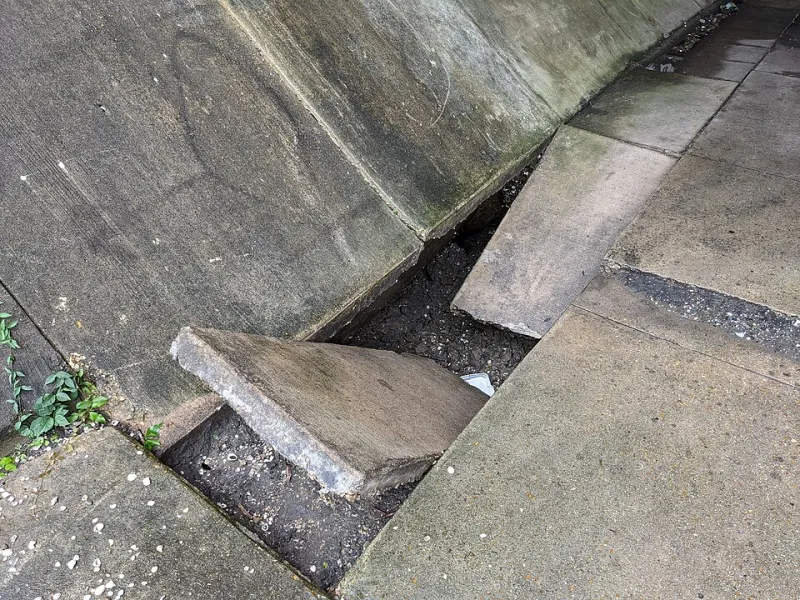
Photo: Bart Everson, CC BY 2.0, via Wikimedia Commons
Drive through almost any mid-sized American city today and you will find the same story written in cracked pavement, rusting water mains, and school buildings that still run on boilers installed during the Nixon administration. These are not signs of neglect by local officials who stopped caring. They are the physical symptoms of a deeper fiscal illness — one that has been quietly compounding for decades while Congress looked the other way.
Municipal debt in the United States has reached a staggering scale. According to the Federal Reserve, state and local governments carry well over three trillion dollars in outstanding debt obligations. Much of that debt was issued to finance the basic infrastructure Americans depend on every day: bridges, sewer systems, water treatment plants, transit networks, and public school facilities. The problem is that many of these bonds were structured with deferred costs that are now coming due all at once — and the cities holding that paper are running out of options.
The Impossible Math of Local Government
Consider what happened in Rockford, Illinois. For years, city officials watched their infrastructure maintenance backlog grow while bond payments consumed an ever-larger share of the municipal budget. By the early 2020s, Rockford was spending more on debt service than on its entire parks and recreation department. Roads deteriorated. A water main replacement project was postponed, then postponed again. Eventually, a rupture flooded a residential neighborhood and cost the city far more to repair than the original maintenance would have.
Rockford is not an outlier. Detroit's long fiscal collapse was precipitated in part by the crushing weight of legacy infrastructure bonds layered on top of pension obligations. Puerto Rico's catastrophic default — which left hospitals without reliable power long before Hurricane Maria arrived — stemmed directly from decades of borrowing to cover the gap between what infrastructure cost and what federal funding provided. Jackson, Mississippi spent years warning federal officials that its water infrastructure was failing. Washington responded slowly, and residents paid the price with a water crisis that made national headlines only after the damage was done.
The pattern is consistent: federal investment retreats, cities borrow to fill the gap, debt service crowds out operating budgets, and eventually the infrastructure fails anyway — only now it fails with interest.
Who Bears the Burden
The cruelest irony of municipal debt spirals is that they fall hardest on the residents who can least afford them. When a city faces a budget shortfall driven by bond obligations, the services most likely to face cuts are those serving lower-income neighborhoods — public transit routes, community health clinics, after-school programs, and branch libraries. Property tax increases, the most common lever available to local governments, are regressive instruments that hit renters and modest homeowners far harder than wealthy property investors who can offset costs through depreciation.
Middle-class families in financially stressed cities find themselves in a particularly cruel bind. They pay rising local taxes while simultaneously watching the quality of the services those taxes are supposed to fund decline. Their children attend schools with leaking roofs. They navigate roads that damage their vehicles. They drink water from pipes that may be decades past their safe operating life. The hidden tax of municipal debt is not a line item on any bill — it is paid in time, health, safety, and opportunity.
What Congress Could Do — And Has Largely Refused To
The federal government is not a passive observer in this crisis. Decades of declining federal investment in state and local infrastructure created the borrowing dependency that now threatens city finances across the country. At its peak in the 1970s, federal grants made up roughly 25 percent of state and local government revenue. That share has fallen dramatically, forcing municipalities to substitute debt for what once came as direct federal investment.
Reversing this requires more than a one-time infrastructure package. Shireen supports a comprehensive municipal infrastructure finance reform agenda built around three pillars.
First, a permanent expansion and modernization of the Build America Bonds program, which provided direct federal subsidies for municipal borrowing costs when it was active from 2009 to 2010. The program saved local governments billions and should be made a standing feature of federal fiscal policy — not a temporary crisis measure.
Second, the creation of a dedicated Federal Municipal Infrastructure Refinancing Facility that would allow cities meeting certain fiscal distress criteria to refinance legacy infrastructure debt at reduced rates, using the federal government's superior borrowing capacity to lower the cost burden on local taxpayers. This is not a bailout. It is a recognition that the federal government's decades of disinvestment helped create these conditions.
Third, targeted grant programs specifically designed to help smaller cities and rural municipalities — which often lack the staff capacity to compete for complex federal competitive grants — access direct infrastructure investment dollars without adding to their debt loads.
A Federal Responsibility, Not a Local Failure
There is a comfortable narrative in Washington that municipal financial distress is a problem of local mismanagement — of mayors who overspent and city councils that made bad deals. That narrative is convenient because it absolves Congress of responsibility. It is also largely false.
The cities in the deepest trouble are disproportionately those that experienced industrial decline, population loss, or demographic shifts that reduced their tax bases precisely as their aging infrastructure required the most investment. They did not choose those circumstances. They inherited them, often as the direct consequence of federal policy decisions about trade, housing, transportation, and economic development made in Washington over many decades.
Shireen believes that a government truly committed to representing every American cannot continue to treat municipal fiscal distress as someone else's problem. The debt silently accumulating in city treasuries across this country is a national issue — and it demands a national response. Every family that drives over a structurally deficient bridge, every child sitting in a classroom with a broken heating system, and every resident boiling water because their city cannot afford to replace lead pipes deserves a congressional representative willing to say: this is our responsibility, and we are going to fix it.
That is the commitment Shireen brings to this campaign. Not because it is politically convenient, but because it is simply the right thing to do.