Closed Doors and Empty Waiting Rooms: The Rural Healthcare Emergency Congress Refuses to Face
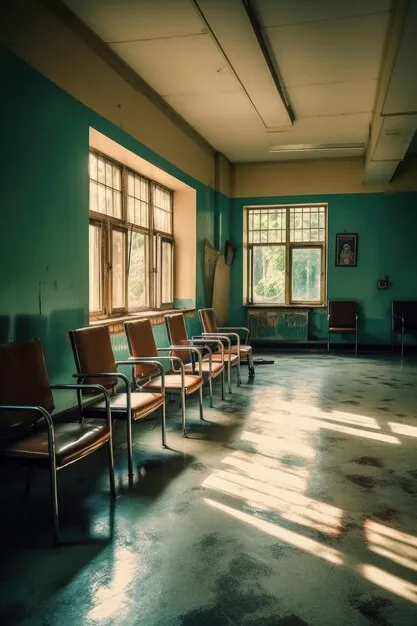
Photo: rural hospital closed small town America empty waiting room, via img.freepik.com
When the Hospital Closes, Who Answers the Call?
In Harlan County, Kentucky, the nearest emergency room is now 47 miles away. In rural Georgia, a mother drove her infant son two hours through the night to receive treatment for a fever that spiked past 104 degrees — because the county clinic had closed its doors eighteen months earlier. In western Nebraska, a retired farmer with a heart condition manages his medications through a mail-order service because the last pharmacy in his town shuttered in 2021.
These are not isolated incidents. They are the daily reality for tens of millions of Americans living in rural and small-town communities — communities that Congress has, for too long, treated as an afterthought.
According to the Chartis Center for Rural Health, more than 140 rural hospitals have closed since 2010, and hundreds more are currently operating at a financial loss, placing them at serious risk of closure. The consequences extend far beyond inconvenience. Research published in Health Affairs consistently demonstrates that patients in rural areas experience higher rates of chronic disease, lower life expectancy, and significantly reduced access to specialty care compared to their urban counterparts. The gap is not narrowing. It is widening.
The Pharmacy Desert Problem
Hospital closures dominate the headlines, but the quiet disappearance of rural pharmacies represents an equally urgent dimension of this crisis. The National Community Pharmacists Association estimates that more than 630 rural communities across the United States have lost their only local pharmacy in the past decade. For elderly residents managing complex medication regimens, or diabetic patients who require insulin refrigeration, this is not a minor inconvenience — it is a life-threatening gap in care.
Maria Gutierrez, a 68-year-old resident of a small community in southern New Mexico, described her situation plainly: "I take five medications. The pharmacy that used to be three blocks from my house is now a vacant storefront. The nearest CVS is in the next town, and I don't drive. My daughter comes when she can, but she works two jobs. Sometimes I skip doses because I simply cannot get there."
Maria's story reflects a structural failure, not a personal one. When the market logic of pharmaceutical retail abandons rural communities, the federal government must be prepared to step into the breach. To date, it has not.
The Data Tells a Damning Story
The health disparities between rural and urban Americans are measurable, persistent, and, critically, preventable. Consider the following:
- Life expectancy in rural counties is, on average, 3.5 years shorter than in metropolitan areas, according to the CDC.
- Maternal mortality rates are significantly higher in rural regions, with rural women facing a 60 percent greater risk of pregnancy-related death than urban women.
- Mental health access is severely constrained, with more than 60 percent of rural Americans living in federally designated Mental Health Professional Shortage Areas.
- Broadband limitations further compound the problem, as telehealth — often cited as a solution — remains inaccessible to the roughly 21 million rural Americans who lack reliable high-speed internet.
These are not statistics. They are people. They are constituents. And they deserve representatives in Washington who will fight for them.
Why Congress Has Failed to Act
The reasons for congressional inaction are, unfortunately, familiar. Healthcare legislation is expensive, politically contentious, and easily weaponized in campaign advertising. Rural healthcare, in particular, suffers from a visibility deficit — these communities lack the concentrated political infrastructure of major metropolitan areas, making it easier for legislators to ignore their needs without immediate electoral consequence.
Furthermore, the healthcare industry's lobbying apparatus has historically opposed the kinds of systemic reforms that would most benefit underserved communities — including expanded Medicaid, price negotiation for prescription drugs, and federal investment in rural hospital stabilization. The result is a Congress that debates endlessly while clinics close and families suffer.
What Shireen Is Fighting For
Shireen's healthcare agenda is built on the straightforward conviction that geography should not determine the quality of care an American receives. Her legislative priorities for rural and underserved communities include:
Rural Hospital Stabilization Act Support: Shireen is a committed advocate for federal legislation that would provide direct financial assistance to rural hospitals operating on thin margins, preventing closures before communities lose their only local emergency care facility.
Pharmacy Access Expansion: Shireen supports federal grant programs that incentivize pharmacists to establish or maintain practices in underserved areas, alongside expanded authority for federally qualified health centers to dispense medications directly to patients.
Medicaid Expansion Advocacy: In states that have not yet expanded Medicaid under the Affordable Care Act, millions of rural Americans fall into a coverage gap — earning too much to qualify for traditional Medicaid but too little to afford marketplace plans. Shireen supports federal incentives to close this gap nationally.
Telehealth Infrastructure Investment: Meaningful telehealth access requires meaningful broadband access. Shireen's platform links healthcare policy to infrastructure investment, advocating for universal high-speed internet as a prerequisite for equitable healthcare delivery in the twenty-first century.
Loan Forgiveness for Rural Healthcare Workers: To address the chronic shortage of physicians, nurses, and mental health professionals in rural areas, Shireen supports expanded student loan forgiveness programs for healthcare workers who commit to practicing in underserved communities for a defined period.
A Question of Political Will
None of these solutions are radical. Several enjoy bipartisan support in polling, if not in legislative action. What they require, above all else, is the political will to prioritize the health of every American — not just those who live in zip codes that attract corporate investment.
Shireen for Congress was founded on the belief that a voice in Washington should be exactly that: a voice for every constituent, in every corner of the district. The families driving hours for emergency care, the seniors rationing their medications, the rural mothers navigating pregnancy without nearby obstetric services — they deserve a representative who sees them, who hears them, and who will fight for them on the floor of Congress.
The healthcare emergency in small-town America is not a mystery. The solutions are known. What has been missing, for too long, is leadership willing to demand them.
Shireen is ready to be that leader.