When Profit Margins Replace Care Standards: The Private Equity Takeover of America's Nursing Homes
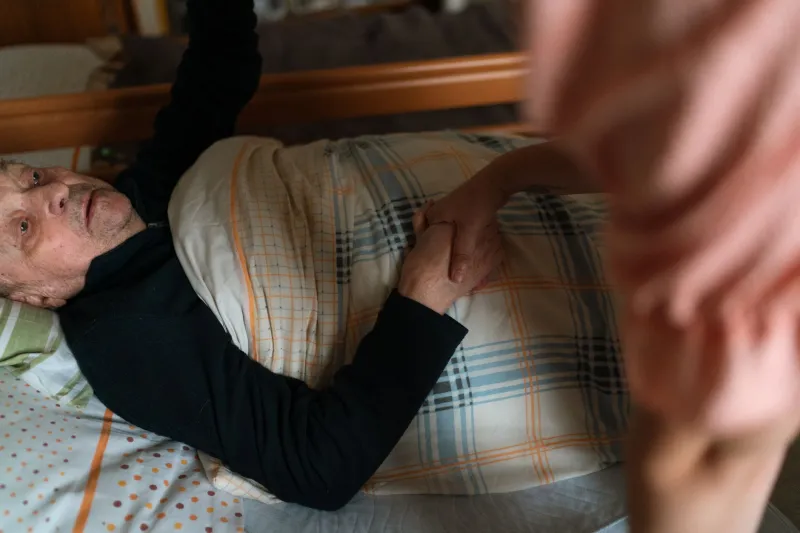
Somewhere in Ohio, a retired schoolteacher named Dorothy spent the final eighteen months of her life in a nursing facility that had recently changed ownership. Her daughter, Renee, recalls visiting to find her mother unwashed, her call light unanswered for hours, and a rotating cast of unfamiliar faces providing care. The staff weren't indifferent — they were exhausted. Three aides were covering a floor designed for seven. The facility had been acquired by a private equity-backed management company fourteen months earlier. Within weeks of the deal closing, staffing levels dropped sharply. The maintenance log showed deferred repairs stretching back nearly a year.
Dorothy's story is not an outlier. It is, by nearly every available measure, an American pattern.
The Quiet Acquisition of a Vulnerable Industry
Over the past two decades, private equity firms have made aggressive inroads into long-term care, acquiring nursing homes, assisted living facilities, and rehabilitation centers at a pace that has fundamentally restructured the industry. Researchers at the University of Pennsylvania estimated that private equity ownership now accounts for roughly 11 percent of all nursing home beds in the United States — a figure that, while seemingly modest, represents hundreds of thousands of the most medically vulnerable Americans.
The business model is not complicated, even if its legal architecture often is. A private equity firm acquires a facility or a chain, frequently using debt financing that is then loaded onto the acquired entity itself. The firm then extracts value through a combination of management fees, sale-leaseback arrangements on the underlying real estate, and aggressive cost-cutting — with labor being the most significant cost in any care setting. Staffing is reduced. Wages stagnate. Maintenance budgets shrink. The goal is to prepare the asset for a profitable resale within three to seven years, at which point the next buyer inherits the same pressures.
The residents, of course, are not part of the transaction in any meaningful sense.
What the Data Reveals
The academic literature on private equity ownership in nursing homes is, at this point, substantial — and deeply alarming. A landmark study published in the Journal of the American Medical Association in 2021 found that Medicare patients in private equity-owned nursing homes experienced a 10 percent higher mortality rate compared to patients in other facilities. The same research documented declines in mobility, increases in pressure ulcers, and a measurable reduction in the likelihood that patients would return home after a stay.
Staffing data collected by the Centers for Medicare and Medicaid Services tells a similar story. Private equity-owned facilities consistently report lower nurse-to-resident ratios than their nonprofit or government-operated counterparts. Certified nursing assistants — the workers who perform the most direct, hands-on care — are particularly stretched thin. These are often workers earning between $13 and $17 per hour, tasked with bathing, feeding, and repositioning residents who cannot care for themselves, frequently without adequate support.
Whistleblowers from within the industry describe a culture of institutional pressure to do more with less. One former director of nursing, speaking on background, described receiving directives from corporate management to reduce overtime costs even as resident acuity — the medical complexity of the patient population — was rising. "We were told to find efficiencies," she said. "In a nursing home, 'efficiencies' means fewer hands on your residents."
Regulatory Gaps That Enable Neglect
Federal oversight of nursing homes is the responsibility of CMS, which conducts inspections and assigns star ratings to facilities across the country. The system has real value — but it has also proven insufficient to the challenge posed by private equity ownership structures.
One of the most significant problems is opacity. Private equity acquisitions are frequently structured through layered ownership entities, making it difficult for regulators — and for families researching facilities — to identify who actually controls a given nursing home. A facility may nominally be owned by a limited liability company with a generic name, which is in turn controlled by a holding company, which is itself a portfolio asset of a fund that is not publicly disclosed. When violations occur, accountability becomes nearly impossible to assign.
Federal law does require disclosure of ownership information to CMS, but enforcement of these requirements has been inconsistent, and the disclosed information is not always made easily accessible to the public. Legislation introduced in recent congressional sessions has sought to strengthen these disclosure requirements and close ownership-reporting loopholes, but such measures have repeatedly stalled in the face of well-funded industry opposition.
State-level regulation varies enormously. Some states have enacted minimum staffing ratios for nursing facilities; many have not. Some conduct surprise inspections; others rely on scheduled visits that give facilities time to prepare. The patchwork nature of oversight creates a landscape that sophisticated operators have learned to navigate.
The Human Toll Behind the Balance Sheet
For families navigating the long-term care system, the consequences of this regulatory vacuum are immediate and personal. Choosing a nursing home for an aging parent is already one of the most difficult decisions a family can face — emotionally, logistically, and financially. The average annual cost of a semi-private nursing home room in the United States now exceeds $90,000. Many families exhaust their savings before qualifying for Medicaid, which then becomes the primary payer.
When the facility selected turns out to be under-resourced and under-staffed, families often have little recourse. Transfers to other facilities are disruptive and sometimes medically risky. Complaints to state ombudsmen can take months to investigate. Civil litigation is available in theory but inaccessible in practice for most families without significant financial resources.
Renee, the daughter of the Ohio schoolteacher, filed a complaint with her state's long-term care ombudsman. The investigation took eleven months. By the time it concluded, her mother had passed away. The facility received a citation. It remained open.
What Congress Can and Must Do
The federal government is not powerless here. Meaningful reform requires action on several fronts simultaneously.
First, Congress must mandate genuine transparency in nursing home ownership. Every facility receiving Medicare or Medicaid funding — which is to say, virtually every nursing home in the country — should be required to disclose its full ownership chain, including the identities of private equity sponsors and their affiliated management companies. This information should be publicly searchable and updated in real time.
Second, federal minimum staffing standards must be strengthened and enforced. CMS issued a proposed rule in 2023 establishing minimum staffing requirements for the first time, but the rule faces ongoing legal and legislative challenges from the industry. Congress should codify meaningful staffing floors into statute, removing them from the vulnerability of administrative reversal.
Third, the financial engineering that enables value extraction at the expense of care quality must be addressed directly. Sale-leaseback arrangements that strip facilities of their real estate assets — leaving them unable to invest in their own infrastructure — deserve specific legislative scrutiny. Management fees paid to affiliated entities should be subject to transparency requirements and reasonable caps when the underlying facility is receiving public funds.
Finally, the residents and workers at the center of this crisis deserve a voice in the legislative process. Family councils, direct care workers, and long-term care ombudsmen should have formal mechanisms for input into federal rulemaking — not just industry trade associations with seven-figure lobbying budgets.
A Congress That Answers to People, Not Portfolios
The private equity takeover of American nursing homes is not an abstraction. It is happening in every congressional district in this country, to families who trusted that the systems meant to protect their most vulnerable loved ones were actually functioning. That trust has been systematically exploited.
Congressional inaction in the face of documented harm is itself a policy choice — one that this campaign categorically rejects. Every American who has ever sat beside an aging parent in a nursing home, or who will one day face that moment, deserves a representative who will treat their family's dignity as a legislative priority rather than a footnote.
That is the commitment this campaign makes. And it is the work that begins on day one.