Paper Trails and Paper Promises: The Quiet Crisis Threatening the Integrity of American Elections
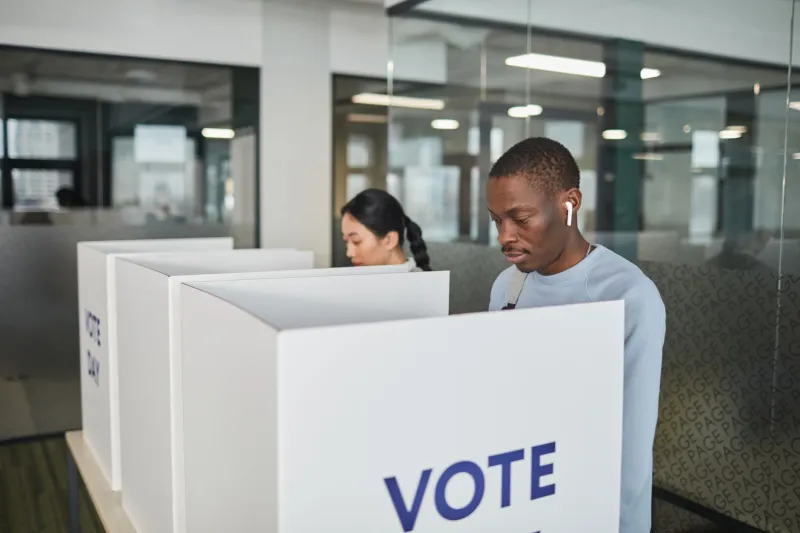
In a mid-sized county in Georgia during the 2022 midterm elections, poll workers arrived to find that roughly a third of their ballot-marking devices had failed overnight. In Pennsylvania, a software misconfiguration caused scanners in multiple precincts to reject ballots that were, by every legal measure, valid. In Arizona, an audit revealed that election management software on certain systems had not received a security patch in over four years.
None of these incidents made national headlines for more than a news cycle. None of them prompted emergency federal legislation. And in nearly every case, local election officials were left to manage the fallout with the same strained budgets and skeleton crews they had before the problems occurred.
This is the state of American election security in 2024 — not a dramatic, movie-villain cyberattack, but a slow-motion institutional failure that threatens the foundational promise of representative government: that every eligible citizen's vote will be counted accurately and without interference.
The Infrastructure Is Older Than You Think
The Help America Vote Act of 2002 was passed in the wake of the 2000 presidential election's catastrophic breakdown and was intended to modernize the country's voting infrastructure. It worked — for a while. Federal funds flowed into states, outdated punch-card systems were replaced, and new electronic voting technology was deployed across thousands of precincts.
But that technology is now more than two decades old. Security researchers at the Brennan Center for Justice have documented that a significant portion of jurisdictions across the United States are still operating voting equipment that is no longer supported by its manufacturers. These are machines for which security updates are no longer issued, replacement parts are increasingly unavailable, and technical expertise is nearly impossible to source.
Running unsupported software on any computer system is considered a serious security vulnerability in virtually every professional IT context. In election administration, it is routine.
The federal government has allocated supplemental election security grants through the Election Assistance Commission, but those funds have been insufficient and inconsistent. In many states, local jurisdictions are expected to fund equipment replacement out of general operating budgets — the same budgets that pay for roads, parks, and public libraries. The result is a predictable race to the bottom, where election security competes with more immediate and visible civic needs.
What "Glitches" Actually Mean
Election officials are understandably cautious about the language they use when discussing technical failures. The word "glitch" is sanitizing shorthand for something far more consequential: a malfunction in the machinery through which democratic legitimacy is conferred.
When a ballot scanner rejects a valid ballot, a voter may or may not be offered a provisional alternative. When a ballot-marking device fails, lines grow longer and some voters — particularly those with mobility limitations, caregiving responsibilities, or hourly jobs — leave without casting a vote. When election management software is misconfigured or compromised, the downstream effects on vote tabulation can be difficult to detect and even harder to remedy after the fact.
Election security researchers have long distinguished between two categories of risk: unintentional technical failure and deliberate exploitation. Both are real. Both are underaddressed. And critically, the conditions that make systems vulnerable to one category also make them vulnerable to the other.
Dr. J. Alex Halderman, a computer scientist at the University of Michigan who has testified before Congress on these issues, has demonstrated in controlled settings that certain widely deployed voting systems contain vulnerabilities that could, in theory, be exploited to alter vote totals without leaving an easily detectable trace. His work, and the work of colleagues at institutions across the country, has been peer-reviewed, publicly available, and largely ignored by the legislative bodies with the authority to mandate remediation.
The Oversight Gap No One Wants to Talk About
Federal oversight of election security is fragmented in ways that compound every other vulnerability. The Election Assistance Commission serves an advisory and certification role but lacks enforcement authority. The Cybersecurity and Infrastructure Security Agency provides technical assistance to states that request it, but participation is voluntary. The Department of Justice can investigate and prosecute violations of federal voting rights law, but its jurisdiction does not extend to technical security standards.
Meanwhile, state-level oversight varies enormously. Some states mandate rigorous pre-election testing, post-election audits, and paper ballot backups. Others have minimal statutory requirements and leave critical decisions to county clerks who may have no formal training in cybersecurity or systems administration.
This is not an accident. The decentralized structure of American election administration reflects genuine constitutional values around federalism and local control. But it also creates a landscape in which the security of your vote depends heavily on which county you happen to live in — a disparity that is fundamentally incompatible with the principle of equal democratic participation.
What Meaningful Reform Actually Looks Like
The legislative solutions to this crisis are neither exotic nor prohibitively expensive. They are, however, politically inconvenient for those who benefit from the current state of ambiguity.
First, Congress must establish a dedicated, recurring federal funding stream for election infrastructure modernization — not one-time grants, but stable, multi-year appropriations that allow jurisdictions to plan equipment lifecycles responsibly. The current model of emergency supplemental funding after high-profile failures is reactive, inefficient, and deeply unfair to the election officials trying to do their jobs with inadequate resources.
Second, federal certification standards for voting systems must be updated and enforced. The voluntary certification process administered by the Election Assistance Commission is a starting point, but it lacks the teeth necessary to remove dangerously outdated or compromised equipment from service. Mandatory minimum standards, with clear enforcement mechanisms, are long overdue.
Third, every jurisdiction in the country should be required to use paper ballots or produce a voter-verified paper audit trail. Paper is not a technological regression — it is a security feature. It provides an independent, human-readable record that can be audited, recounted, and verified in ways that purely electronic systems cannot. Risk-limiting audits, which use statistical sampling to verify election outcomes, should be mandated nationwide as a condition of federal election funding.
Fourth, election officials at every level need access to professional cybersecurity training and resources. Many county election offices are staffed by dedicated public servants who simply do not have the technical background to evaluate or respond to sophisticated threats. Federal investment in training programs and a standing technical assistance corps would address this gap directly.
Democracy Requires Maintenance
There is a temptation, in discussions of election security, to treat the subject as too technical or too politically charged for straightforward legislative action. That temptation should be resisted forcefully.
The right to vote is the cornerstone of every other right a democratic government can protect or deliver. When the machinery through which that right is exercised is underfunded, outdated, and inadequately overseen, the damage is not abstract. It falls most heavily on communities that already face the highest barriers to participation — communities where polling places are fewest, lines are longest, and provisional ballot rates are highest.
Congress has the authority and the responsibility to act. The question is whether there is sufficient political will to treat the integrity of American elections as the urgent national priority it plainly is. Shireen for Congress believes there is — and that voters across this country deserve representatives who will fight to ensure that every ballot cast is counted accurately, securely, and without exception.