Zoned Out: How America's Housing Rules Were Written to Keep Working Families From Building Wealth
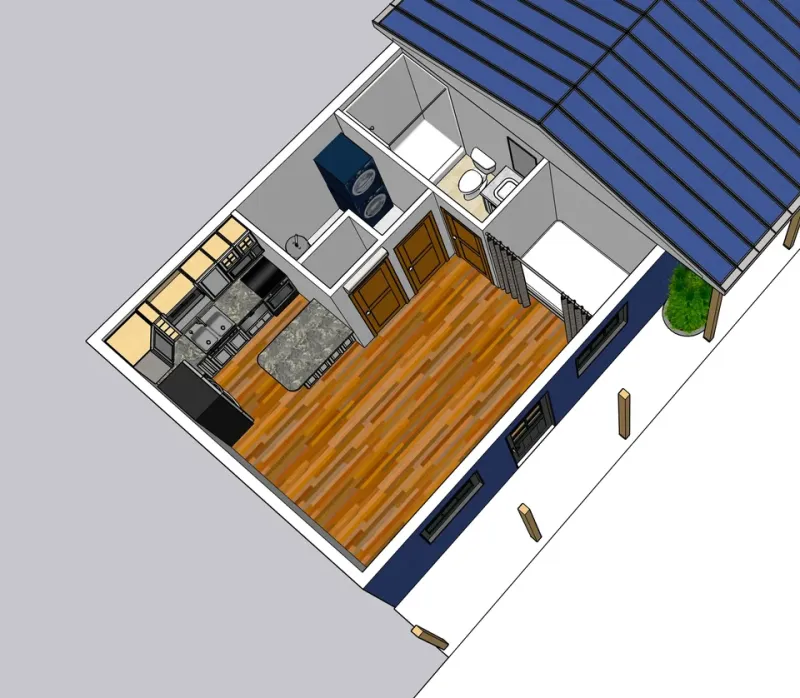
Photo: Wikideas1, CC0, via Wikimedia Commons
The Rules Nobody Talks About Are Shaping Everything
When most Americans think about why they cannot afford a home, they picture rising interest rates, bidding wars, or a general sense that the economy has moved against them. What rarely enters the conversation is a dense, technical body of local law that has been quietly engineering housing scarcity for generations: zoning regulation.
Zoning codes — the municipal rules that dictate what can be built, where, and in what quantity — may sound like dry bureaucratic machinery. In practice, they function as one of the most powerful wealth-sorting mechanisms in American life. They determine who gets to live in a thriving neighborhood with good schools and reliable infrastructure, and who gets priced out entirely. And right now, they are failing the vast majority of working Americans.
This is not an accident. It is a policy outcome, and it demands a policy response.
How Scarcity Gets Engineered
Single-family zoning — the designation that reserves entire neighborhoods exclusively for detached, single-unit homes — covers roughly 75 percent of residential land in most American cities. That figure alone tells a striking story. In communities where demand for housing is intense and land is limited, legally prohibiting the construction of duplexes, townhomes, or small apartment buildings does not preserve neighborhood character. It manufactures a shortage.
When supply cannot respond to demand, prices climb. That is elementary economics. But what makes the housing crisis particularly cruel is that the shortage is not natural — it is legislated. Local governments in some of the most economically vibrant parts of the country have effectively made it illegal to build the kind of modest, moderately priced housing that generations of working families used to rely on as their first step toward ownership.
Minimum lot size requirements, setback mandates, height restrictions, parking minimums, and lengthy permitting processes compound the problem at every turn. Each rule, taken individually, may have a defensible origin. Taken together, they form a regulatory wall that makes building affordable housing in desirable areas financially impossible for anyone except large developers with deep capital reserves.
Who Benefits From the Status Quo
It would be a mistake to treat this as a problem without beneficiaries. Existing homeowners in high-demand areas have a direct financial interest in keeping supply constrained. When zoning prevents new construction, the value of existing homes rises. Neighborhood associations and local political organizations have historically wielded enormous influence over zoning boards, and they have used that influence to protect asset values at the direct expense of housing access for everyone else.
More recently, institutional investors — large private equity firms and real estate investment trusts — have entered the picture in force. When single-family homes are treated as scarce commodities rather than basic shelter, they become attractive financial instruments. Corporate landlords have purchased hundreds of thousands of single-family homes across the Sun Belt and Midwest, converting them into long-term rentals and removing them from the ownership market permanently. In some metro areas, institutional buyers account for a significant share of all home purchases, particularly in the affordable price ranges where first-time buyers compete.
The result is a feedback loop that is devastating for working families: zoning prevents new construction, scarcity drives up prices, corporate capital floods in to capture returns, prices rise further, and homeownership recedes further out of reach for anyone without existing wealth or family equity to draw on.
The Political Blockade
Zoning reform has gained real momentum in recent years, and several states — including California, Oregon, Minnesota, and Montana — have passed legislation limiting exclusionary single-family zoning at the state level. These are meaningful victories. But they have been hard-won against fierce opposition from well-organized local interests, and the federal government has largely stood on the sidelines.
That absence matters. Federal housing policy retains enormous leverage over local land use through the conditions attached to grants, transportation funding, and community development dollars. An administration and Congress willing to use those tools could create powerful incentives for municipalities to reform exclusionary zoning codes. Instead, Congress has repeatedly failed to pass comprehensive housing legislation, leaving communities to navigate a patchwork of state-level reforms while the national shortage deepens.
The political calculus is uncomfortable but worth stating plainly: legislators whose constituents are primarily existing homeowners face few electoral consequences for blocking housing supply. The people harmed most by restrictive zoning — renters, young families, lower-income workers — are often not yet present in the communities where these decisions are made, because they cannot afford to be there. Their political voice is diffuse and their representation in local and federal government remains inadequate.
What Real Reform Looks Like
The policy solutions are not mysterious. They are well-documented, increasingly bipartisan in their intellectual foundations, and politically achievable with the right leadership.
At the federal level, tying Community Development Block Grant funding and federal transportation dollars to demonstrated progress on zoning reform would give municipalities a concrete reason to act. Legislation requiring localities receiving federal housing assistance to permit multifamily construction in high-opportunity areas would begin to dismantle the geography of exclusion that current zoning enforces.
Federal investment in social housing models — publicly financed, mixed-income developments that remain permanently affordable — could begin to build a stock of homes that exist entirely outside the speculative market. Countries across Europe have demonstrated that this approach works at scale. There is no credible reason the United States cannot pursue it.
On the demand side, expanding down payment assistance programs targeted specifically at first-generation homebuyers and families in historically redlined communities would help close the racial and generational wealth gaps that the current system has widened for decades. Pairing that assistance with supply-side reform is essential; without new construction, down payment subsidies simply fuel further price increases.
Curbing the most aggressive practices of institutional investors — through targeted taxation of large-scale single-family rental portfolios or restrictions on bulk purchases in tight markets — would help restore the ownership market as a realistic option for individual families rather than a vehicle for corporate yield.
A Voice That Represents Everyone
The housing crisis is not a natural disaster. It is the accumulated result of policy choices — choices about who gets to build, where, and for whom. Reversing those choices requires representatives who are willing to name the problem honestly, resist the political pressure of entrenched local interests, and champion legislation that treats housing as a fundamental component of a stable, dignified life.
Every family that cannot afford to buy a home in the community where they work is a family whose economic future has been constrained by rules they never voted on and may not even know exist. Every young worker paying 40 percent of their income in rent in a city that legally prohibits the construction of the apartment building next door is experiencing a policy failure, not a market outcome.
Shireen is running for Congress because these failures are not inevitable, and because working families deserve a representative who will fight to change them. The housing lottery is not a fair system. It is time to build a better one.