Rationing Insulin and Skipping Refills: The Human Cost of Congress's Silence on Drug Prices
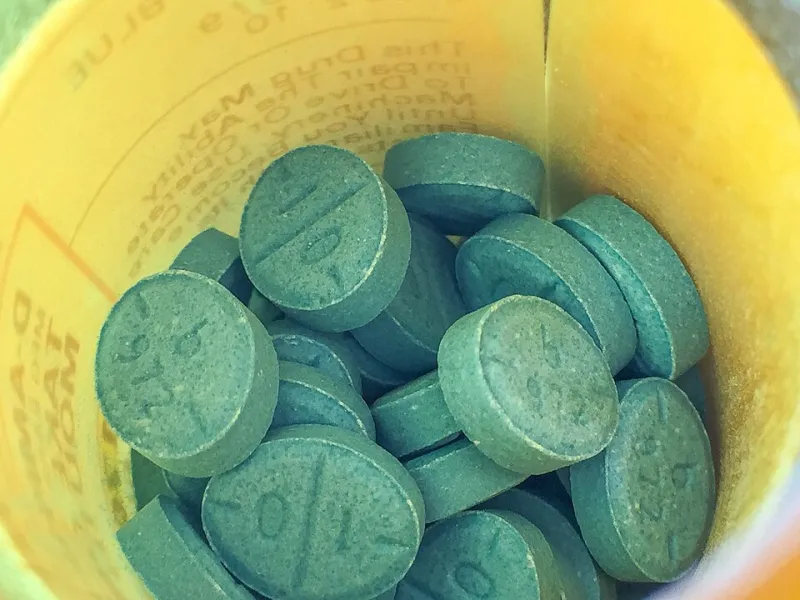
Photo: Tony Webster from Minneapolis, Minnesota, United States, CC BY 2.0, via Wikimedia Commons
Maria Torres is a fifty-three-year-old middle school teacher in Albuquerque, New Mexico. She has Type 2 diabetes, a condition she manages carefully with insulin and two additional medications. Her school district's health insurance is decent by most measures — but decent does not mean adequate when the out-of-pocket cost of her insulin alone runs to over four hundred dollars a month before she meets her deductible each January. For the first three months of every year, Maria rations her doses. She stretches a month's supply into six weeks. She monitors her blood sugar obsessively, trying to compensate. Her doctor knows. Her doctor worries. Neither of them has any good options.
Maria's story is not unusual. It is, in fact, devastatingly ordinary. A 2023 survey by the Kaiser Family Foundation found that nearly one in three American adults reported not taking medications as prescribed in the past year because of cost — skipping doses, cutting pills in half, or simply not filling prescriptions at all. These are not people without insurance. Many of them have coverage. The insurance just does not cover enough.
The Price Gap That Defies Explanation
The United States pays more for prescription drugs than any other wealthy nation on earth — often by a factor of two, three, or even five. A monthly supply of Humira, a common treatment for rheumatoid arthritis and Crohn's disease, costs an American patient roughly $5,800 before any insurance adjustment. The same drug costs approximately $1,400 in Germany and under $900 in the United Kingdom. The drug is identical. The manufacturing costs are comparable. The difference is policy.
Other developed nations negotiate drug prices directly with pharmaceutical manufacturers. The federal government of the United States, by contrast, was for decades legally prohibited from negotiating Medicare drug prices at all — a restriction inserted into the 2003 Medicare Modernization Act under heavy pharmaceutical industry lobbying pressure. The Inflation Reduction Act of 2022 began to chip away at this prohibition, allowing Medicare to negotiate prices on a limited set of drugs. It was a meaningful step forward. It was also, by any honest assessment, a fraction of what is needed.
Meanwhile, pharmaceutical companies continue to report profit margins that most industries can only dream of. In 2022, the top ten pharmaceutical corporations collectively earned over $110 billion in net profits. These are not the earnings of companies operating on thin margins while they race to cure the next pandemic. They are the returns of an industry that has mastered the art of pricing products according to what the market will bear — which, when those products are medicines people will die without, turns out to be nearly anything.
The Lobby That Owns the Conversation
How does this situation persist in a democracy where the overwhelming majority of voters — across party lines — support drug price reform? The answer is not complicated, even if it is uncomfortable to state plainly: the pharmaceutical industry is among the most powerful lobbying forces in Washington.
PhRMA, the industry's primary trade association, spends more on federal lobbying than almost any other organization in the country. In recent election cycles, pharmaceutical companies and their affiliated political action committees have contributed hundreds of millions of dollars to congressional campaigns. The return on that investment has been consistent: watered-down reform proposals, delayed implementation timelines, and carve-outs that protect the most profitable products from meaningful price controls.
This is not a partisan observation. Members of both parties have accepted pharmaceutical industry money and subsequently softened their positions on pricing reform. The difference is in degree and in the willingness to acknowledge the conflict. Shireen has made a straightforward commitment: no pharmaceutical industry PAC money, no softened positions, and no apologies for saying that the current system is designed to enrich shareholders at the expense of patients.
What Real Reform Looks Like
There is no shortage of serious legislative proposals for addressing prescription drug costs. The challenge has never been ideas — it has been the political will to pass them over industry opposition.
Shireen supports a multi-pronged approach that addresses both the immediate affordability crisis and the structural conditions that created it.
Expanding Medicare negotiation authority is the most urgent priority. The current law allows negotiation on a small number of drugs after they have been on the market for years. That scope should be dramatically broadened, with negotiated prices made available not just to Medicare beneficiaries but to all Americans through a reference pricing mechanism.
Importing drugs from countries with strong regulatory standards — Canada, the United Kingdom, and the European Union among them — would introduce genuine market competition and give Americans immediate access to lower prices for commonly used medications. The FDA has the authority to facilitate this; what has been missing is congressional pressure to act on it.
Capping out-of-pocket costs for insulin and other essential medications at a meaningful ceiling — not the $35 cap that currently applies only to Medicare beneficiaries, but a universal cap covering all insured Americans — would provide immediate relief to patients like Maria Torres who are rationing doses today.
Finally, reforming the patent extension system that pharmaceutical companies use to delay generic competition for brand-name drugs would allow lower-cost alternatives to reach patients years sooner than the current system permits.
It is worth addressing the innovation argument directly, because the industry raises it constantly: that price controls will reduce the investment in research and development that produces new treatments. This claim deserves scrutiny. A substantial portion of foundational pharmaceutical research is funded by federal grants through the National Institutes of Health — meaning taxpayers already subsidize the discovery phase of drug development. The argument that corporations need unlimited pricing power to fund innovation also does not explain why those same corporations spend more on stock buybacks and marketing than on research in most years. Reform can be designed to protect genuine innovation investment while eliminating the pure pricing power that has nothing to do with research costs.
A Congress That Works for Patients
David Chen, a retired firefighter in suburban Ohio, takes five medications to manage heart disease. His Medicare Part D plan covers most of the cost, but the coverage gap — what beneficiaries call the donut hole — still costs him thousands of dollars each year. He has started skipping one of his medications every other month. His cardiologist has told him this is dangerous. David knows. He also knows that his fixed income does not stretch far enough to cover everything.
Maria Torres rations insulin in Albuquerque. David Chen gambles with his heart medication in Ohio. These are not edge cases or anecdotes selected for emotional effect. They represent millions of Americans who are quietly managing impossible situations while the legislative branch of their government remains too compromised by industry money to act with the urgency the moment demands.
Shireen is running for Congress because every American deserves a representative who understands that health care is not a luxury product — it is a fundamental condition of a dignified life. Drug pricing reform is not a radical idea. It is a practical, overdue correction to a system that has drifted far from its purpose. And it is exactly the kind of reform that Shireen will fight for from day one in office.